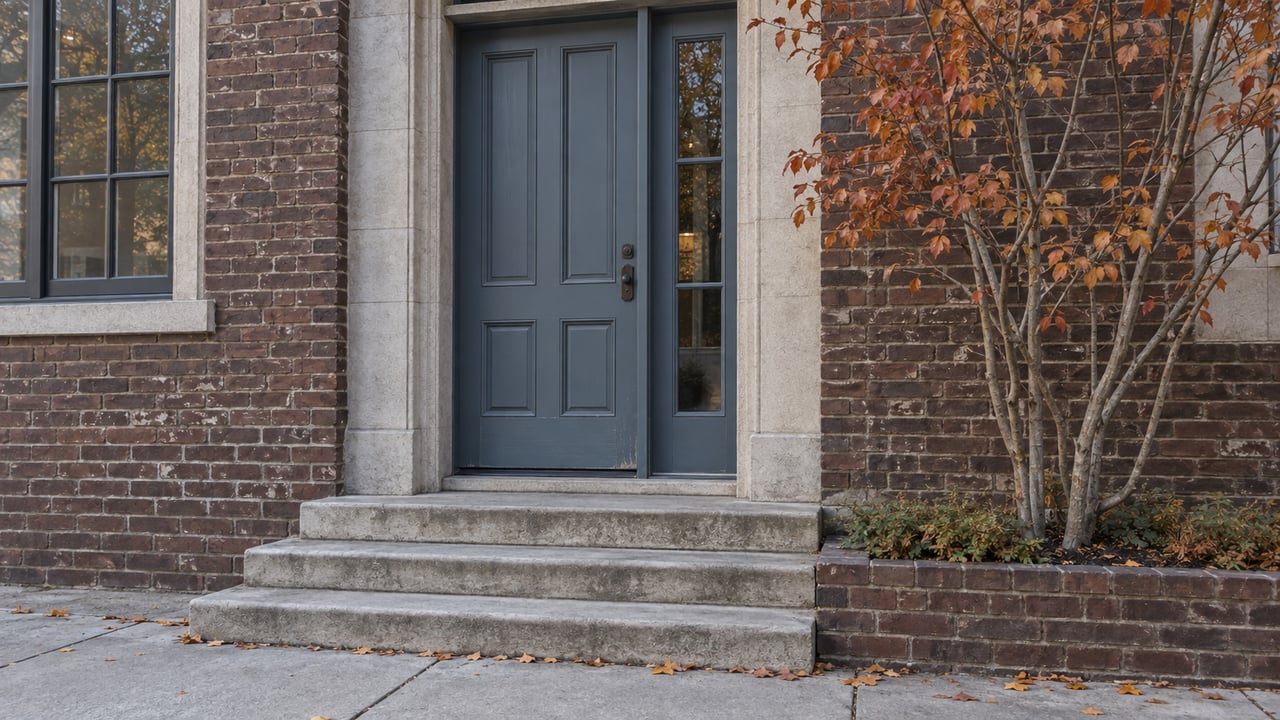
Patricia Guerrero grew up watching her father cook. Isidro Guerrero opened Durango Mexican Restaurant on Thorndale Avenue in the 1980s, and decades later his daughter and her brother opened Edgewater Tacos a block from where they grew up, partly to keep his name attached to the neighborhood after he died in 2021. Edgewater Tacos was built for speed: pick-up counter, sidewalk seating in summer, a fish taco good enough that customers drove in from Indiana and Wisconsin. This year Guerrero is opening a second, larger restaurant two blocks north on Clark Street. De Colores Mexican Grill will have a rear patio, a full bar, and a menu that expands past Mexican dishes into Ecuadorian, Colombian, and Cuban food.
That is not a new operator discovering Andersonville. That is a family that has been cooking on these blocks since the Reagan administration finally opening a room big enough to sit down in.
The same pattern shows up twice more on Clark Street over the past year, and once you see it, the neighborhood's fall stops reading like a list of openings and starts reading like something closer to a settlement. Nobody arrived from outside to bet on Andersonville. The people already holding equity here, in family history, in existing leases, in bar groups that already run three other rooms within walking distance, are the ones expanding.
The Three Addresses That Changed Hands
Devil Dawgs, a Chicago hot dog chain, opened its newest location at 5259 N. Clark St. last October, in the storefront that had belonged to Reza's, a Persian restaurant that ran long enough to become a neighborhood landmark before closing in 2023. Devil Dawgs isn't a family homecoming story the way De Colores is, but it isn't a stranger's bet either. It's a Chicago-born chain expanding within the city it already knows, filling a space that sat empty for roughly two years with a menu built around the Chicago hot dog, jumbo spicy sausage, and Italian beef sandwiches that this specific stretch of Clark Street already orders by habit.
A few blocks south, Piacere Mio has been moving into 1303 W. Wilson Ave., a storefront that has held four different identities in the past decade: a pizza restaurant from 2017 to 2019, a vegan Mexican concept through 2022, Floreen's Chicken & Roost for three months in 2023. Signage went up last spring and the buildout has continued since, which tracks with an operator that isn't rushing because it already has a working restaurant in Forest Park to fall back on. This isn't an unproven concept testing a trendy block. It's an established suburban Italian kitchen with the patience to get a second location right.
Then there's Marty's Martini Bar, which closed at 1511 W. Balmoral Ave. in September 2024 and reopened more than a year later at 1477 W. Winnemac Ave., in the former home of Boca Loca Cantina. The new owner is 2Bears Tavern Group, which already runs 2Bears Tavern in Uptown, SoFo Tap in Andersonville, Meeting House Tavern in Andersonville, and Jackhammer in Rogers Park. Marty's reopening under 2Bears isn't a new bar group betting on the neighborhood. It's an existing bar group adding a fourth address inside a radius they already operate in.
Three storefronts, three different stories, one shared shape: every operator taking new square footage on or near Clark Street over the past year already had a foothold within a few blocks of it, whether that foothold was a family recipe, a suburban location, or three other bars.
What Turnover Usually Means, and What This Turnover Means
Storefront churn is normally read as instability. A restaurant closes, the space sits dark, and the neighborhood loses a little bit of its texture until someone unrelated takes a flyer on the address. That reading doesn't hold up against what actually happened on Clark Street over the past year. Cescas held its Andersonville corner for a decade before turning the keys over to a restaurant family that already had customers driving in from two states. Reza's ran long enough to be a landmark before a Chicago-based chain took the space rather than an unknown startup. The Wilson Avenue storefront that's held four concepts in ten years is now going to an operator with an existing, working restaurant in the suburbs rather than a first-time concept.
None of that is a neighborhood losing its footing. It's a corridor where the rent, the foot traffic, and the density of apartments above the storefronts are still strong enough that operators with something to lose are the ones willing to take the leases. A brand-new concept with no track record is a bigger risk for a landlord than a family expansion or an existing bar group's fourth address. The fact that Clark Street's recent turnover skews so heavily toward operators who already have skin in the game says something about how landlords and lenders are pricing that block right now, and it isn't a discount.
The Five Weeks the Chamber Actually Built
The Andersonville Chamber of Commerce's fall calendar is dense enough that it only makes sense for someone who can walk to all of it without touching a car.
| Event | Date |
|---|---|
| Vintage Market | September 13 and 27 |
| Arts Weekend | September 25 to 27 |
| Fall Wine Walk | September 27 |
| Farmers Market (final week) | Wednesdays through October 21 |
| Bingofesten | October 13 (second Tuesday monthly) |
| Aville-o-ween | October 31 |
| Autumn Restaurant Week | November 1 to 15 |
Look at the last weekend of September specifically. Arts Weekend runs Friday through Sunday, the second Vintage Market of the month lands on that same Sunday, and the Fall Wine Walk closes out the stretch that same day. Three separate Chamber events, three separate sign-up pages, land inside the same 72 hours. That isn't an accident of scheduling. It's what happens when a business district has enough density, in storefronts and in the residents who live above and around them, that organizers can stack programming without worrying about audience overlap thinning any single event out.
The same logic explains why Bingofesten runs monthly instead of as a one-off. A recurring second-Tuesday event only works as a business model if there's a reliable audience within walking distance every month, not just a tourist crowd chasing a single headline weekend. Andersonville's Chamber is building a calendar for people who live close enough to show up in October, November, and again in December, the same audience whose rent upstairs is what let Marty's Martini Bar, Piacere Mio, and De Colores pencil out as expansions rather than gambles.
Reading the Two Threads Together
The restaurant turnover and the events calendar aren't separate stories. They're describing the same underlying fact from two angles. A neighborhood where three different operators are willing to expand or return, rather than a neighborhood a first-timer has to be convinced to try, is also a neighborhood dense enough to support a Wine Walk, a Vintage Market, and an Arts Weekend on the same weekend without any of them cannibalizing the others.
That density is the actual story of Andersonville's fall. Not that new restaurants opened, restaurants open in every Chicago neighborhood every season, but that the specific operators willing to bet on Clark Street over the past year all already had a reason to trust it. A daughter finishing what her father started on Thorndale. A suburban restaurant confident enough to bring its menu into the city. A bar group that already runs three other rooms within walking distance, adding a fourth. None of them needed to be convinced Andersonville was worth the lease. They already knew.
If you live within walking distance of Clark and Berwyn, none of this changes your Saturday. You already know which storefront used to be Reza's and which one used to be Cescas. What it does tell you is that the block you live on is the kind of block operators with something to protect keep choosing, season after season, storefront after storefront, and that's a quieter kind of vote of confidence than any grand opening banner ever is.
If you're weighing what a stretch like this means for a home or a two-flat near Clark Street, that's a conversation worth having with someone who watches this corridor for a living. The Chris Demos Group can walk you through it.