Wondering if life in Chicago’s Loop is all office towers and commuter crowds? If you are considering a move to 60601, it helps to know what daily life actually feels like once the workday starts, ends, and blends into everything in between. This guide gives you a realistic look at how people live in the Loop, from housing and transit to parks, culture, and the rhythm of downtown living. Let’s dive in.
The Loop Is More Than Offices
If you picture the Loop as a place that empties out after 5 p.m., 60601 tells a different story. This part of downtown includes major residential, cultural, and recreation anchors like Millennium Park and the Chicago Riverwalk, which help keep the area active throughout the day and into the evening.
The Loop’s boundaries are generally framed by the Chicago River to the north and west, Ida B. Wells Drive to the south, and Lake Michigan to the east. In other words, you are in the center of downtown Chicago, with many of the city’s best-known public spaces woven into everyday life.
Daily Life Feels Fast and Walkable
Living in 60601 usually means your routine is shaped by proximity. You are close to transit, public spaces, dining, and cultural venues, so daily errands and outings often happen on foot or with a short ride.
This is a dense neighborhood by design. Census Reporter estimates about 15,235 residents in just 0.4 square miles, which works out to roughly 39,199.7 people per square mile. That density shows up in the street activity, building style, and the general pace of life.
For many residents, that is part of the appeal. Instead of planning your week around driving from place to place, you can often step outside and choose between a park walk, a coffee run, a train ride, or an evening event within minutes.
Housing Is Mostly High-Rise Living
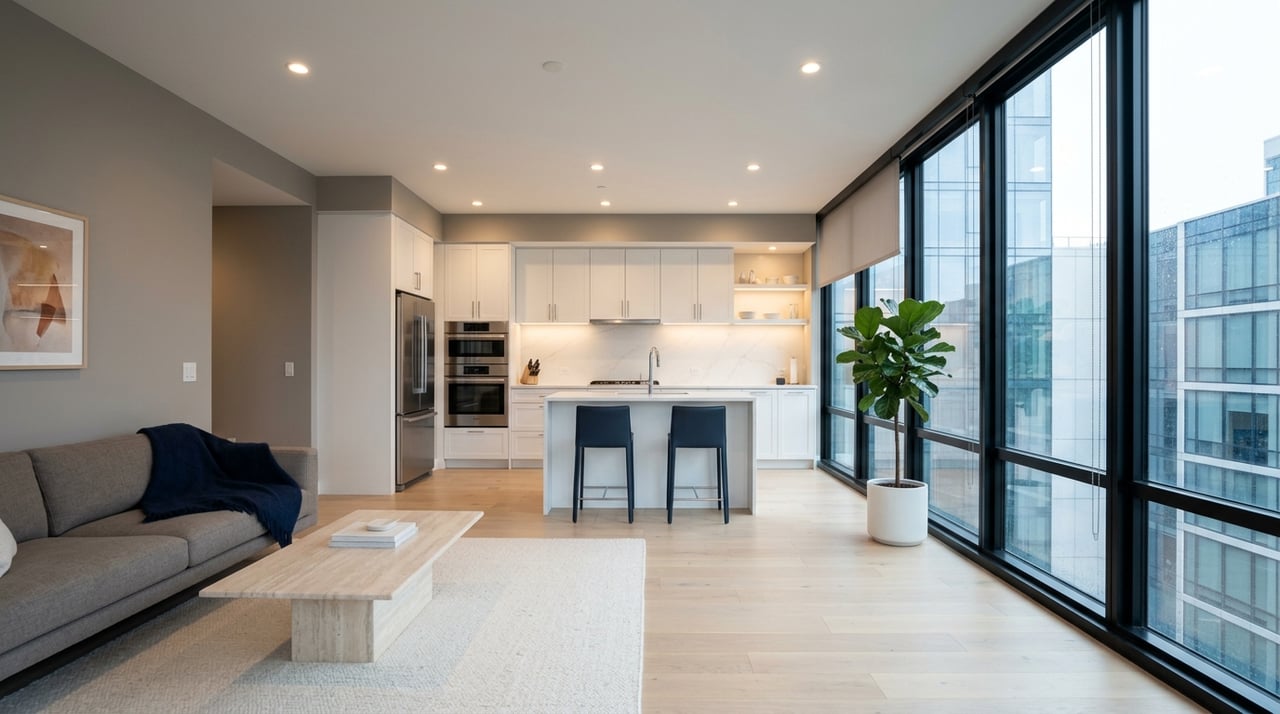
If you are home shopping in the Loop, it is important to set the right expectations. In 60601, the housing pattern is overwhelmingly vertical, with apartments and condos in multi-unit buildings making up the bulk of what you will find.
Census Reporter shows that 98% of the housing stock is multi-unit, and 72% of occupied homes are renter occupied. Detached housing is limited, so buyers and renters should expect condo towers, apartment buildings, and amenity-driven high-rise living to be the norm.
Owner-occupied units in the ZIP have a median value of $526,200 according to Census Reporter. Household size is also compact at 1.6 persons per household, which fits the area’s more urban, flexible style of living.
The Resident Profile Skews Young and Mobile
The Loop has a distinct demographic profile compared with many suburban neighborhoods. The median age in 60601 is 33.4, with 27% of residents between 20 and 29 and another 28% between 30 and 39.
That does not define who can live there, but it does help explain the neighborhood’s energy. You are in an area where recent movers, renters, and people looking for convenience are a major part of the daily mix.
Census Reporter also estimates that 35.7% of residents moved during the previous year. Practically speaking, that suggests a neighborhood where change is common and where many people choose the Loop as an amenity-rich home base.
Transit Shapes the Routine
One of the biggest lifestyle advantages in the Loop is how easy it can be to live car-light. CTA’s downtown guide says all rail lines operate downtown daily until at least midnight, except the Purple Line Express, with trains generally arriving every 7 to 10 minutes during the day and early evening and every 10 to 15 minutes later in the evening.
That kind of service matters in everyday life. It means commuting, meeting friends, reaching downtown attractions, or getting across the city can often happen without a car.
The CTA also notes that riders can reach most downtown attractions by one bus or train. If travel is part of your routine, the Blue and Orange lines connect downtown to O’Hare and Midway, which adds another layer of convenience.
Regional Access Matters Too
The Loop is not just connected to the city. It also works as a regional transit hub for people who split time between downtown and the suburbs.
Ogilvie Transportation Center serves as the downtown terminal for Metra’s Union Pacific Northwest line, which includes Arlington Heights. Millennium Station also connects to CTA routes and the South Shore line. If your work, family, or social life stretches beyond downtown, that regional access can be a major benefit.
Parks Are Part of Everyday Living
In many downtown neighborhoods, green space can feel like an afterthought. In 60601, parks are part of the lifestyle.
Millennium Park at 201 E. Randolph is one of the area’s defining public spaces. It is known for Cloud Gate, Crown Fountain, Lurie Garden, and Jay Pritzker Pavilion, along with free summer music and film series and seasonal holiday programming.
That means your version of “going to the park” can include a lunch break outdoors, a concert, a walk through landscape design, or meeting friends by one of Chicago’s most recognizable landmarks. It brings an unusual amount of cultural energy to everyday life.
Maggie Daley Park Adds Recreation
Just east of Millennium Park, Maggie Daley Park adds a more recreation-focused option. The Chicago Park District describes it as a 20-acre park connected by the BP Pedestrian Bridge and equipped with a playground, climbing wall, mini golf, skating ribbon, tennis courts, picnic groves, and a formal garden.
For residents, that creates more variety than you might expect in a downtown setting. Whether you want open space, programmed activities, or a place to get outside without leaving the neighborhood, it is part of the local routine.
Evenings Stay Active
A big question buyers often ask is whether the Loop feels alive after business hours. In 60601, the answer is generally yes.
The Chicago Riverwalk helps drive that. Located at 376 N. Michigan, it is a pedestrian waterfront trail with restaurants, concessions, benches, boat rentals and tours, and performance seating. It is open daily from 6 a.m. to 11 p.m., which gives residents a reliable place to walk, meet up, or unwind near the water.
The Riverwalk also hosts Art on theMART nightly from April through December. Add in dining, rooftop options, happy hours, brunch spots, and late-night choices described by Loop Chicago, and the neighborhood keeps a noticeable amount of energy beyond the standard workday.
Culture Is Built Into the Neighborhood
One of the clearest differences between living in the Loop and living in many other neighborhoods is how close you are to public culture. You do not need to plan a special trip for it. It is simply part of the environment.
The Chicago Cultural Center at 78 E. Washington offers free entry and free public programming, including exhibits, music, dance, theater, films, lectures, and family events. That kind of access makes spontaneous plans easier and gives residents more ways to enjoy downtown without needing a major occasion.
For some people, this is the real value of Loop living. You are not just near amenities. You are living in a place where art, events, architecture, and public spaces are part of the weekly rhythm.
What the Lifestyle Is Best Suited For
The Loop tends to work well for people who want convenience, transit access, and a built-in urban routine. If you like the idea of walking to parks, relying on trains, and living in a multi-unit building close to dining and culture, 60601 may feel like a natural fit.
It may be less aligned with buyers looking for detached homes, larger lots, or a quieter, lower-density setting. The area’s numbers point clearly toward compact households, high-rise housing, and a more mobile resident base.
That is why it helps to approach the Loop as a lifestyle choice, not just a map location. When your home, commute, recreation, and social options are all tightly connected, daily life tends to feel efficient, active, and very urban.
If you are weighing whether the Loop fits your goals, the right guidance can help you compare lifestyle, building type, and long-term value with more clarity. For personalized help navigating Chicago-area real estate, connect with Christopher Demos.
FAQs
What is everyday life like in Chicago’s Loop ZIP code 60601?
- Everyday life in 60601 is typically walkable, transit-oriented, and centered around high-rise living, public parks, dining, and downtown cultural spaces.
Is Chicago’s Loop only a business district?
- No. The Loop includes residential buildings, Millennium Park, Maggie Daley Park, the Chicago Riverwalk, dining, and cultural destinations that keep the area active beyond office hours.
What kind of housing is most common in the Loop?
- In 60601, most housing is in multi-unit buildings, including apartments and condos, with renter occupancy more common than ownership.
Can you live in the Loop without a car?
- Many residents can live car-light because downtown CTA service is frequent and broad, and Metra adds regional access to suburban destinations.
Is the Loop active at night?
- Yes. The Riverwalk, evening dining, cultural programming, and seasonal events help keep parts of the Loop busy after the workday ends.